AI image generation: The good, the bad and the ugly
By
Rebecca Brown
24th July 2023
5 min read
AI has been the hot topic in our team meetings over the past few months, with the Skout team debating the pros and cons of its use. From using it to assist with desk research and providing inspiration for headlines through to transcribing interviews to help remove the need for extensive notetaking. Its flipside, however, has driven conversations around its lack of creativity, accuracy of information, and of course, its unpredictability; will there be an AI doomsday? (Let’s hope not!)
One area of AI that has sparked my curiosity, is its ability to create imagery. Within the world of marketing, images can speak louder than words – they help tell the story. Whether that’s selecting visuals to represent your brand identity, choosing the perfect picture to accompany a blog, or using an image that will connect with your audience on an emotional level. The power of imagery should not be underestimated. Yet, as I’m sure you’ll agree, as marketers we can often go down rabbit holes to find the most suitable image to tell the story.
The good
Personally, I’ve lost many hours of my life searching through reams of stock images only to choose one that doesn’t quite meet my expectations. Whilst the alternative is to brief a designer or photographer, you might need to save your time and budget for bigger content assets. Instead, creating imagery through an AI generator could be a solution to your image woes. If you haven’t explored platforms such as Bing Image Creator, Midjourney, DALL-E, or Jasper Art (there are many out there), I would recommend you go and have some fun. In a nutshell, you can input your image specifications into the generator and ‘voila’, out it comes. For example, let’s say I needed an image of a female PR professional with ginger hair writing a blog on her laptop, a platform like Bing would generate this…
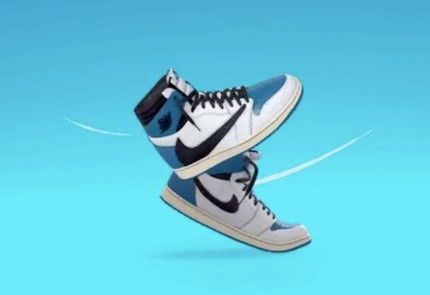
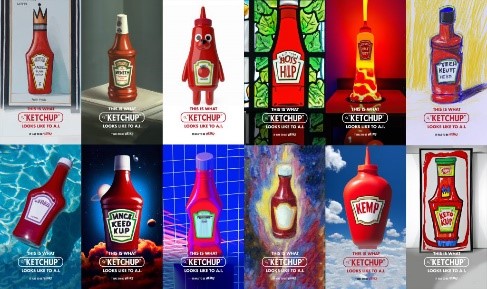
Both B2B and B2C brands have been experimenting with AI imagery. Heinz launched its first-ever ad campaign with visuals generated entirely from AI. Stemming from a simple idea, consumers were urged to share AI image prompts for ketchup-based imagery, with the best creations appearing in social media posts and print ads. Another clever example is the AI powered ‘shoe mirror’ that has been designed to turn vacant shop fronts into interactive, revenue generating ads. Here’s how it works: The shoe mirror analyses the clothing of passersby and finds shoes to match their outfits using augmented reality.
The bad
The global generative AI market is growing fast and is predicted to reach USD 126.5 billion by 2031 –AI imagery is just one of the many areas driving this growth. Whilst it definitely has its perks; speed and efficiency, unlimited variation, accessibility; the reality is that its still in its beginnings. AI art often gets a poor reputation for lacking emotional depth and meaning as AI is trained based on algorithms and machine learning rather personal experience or feeling. Also, AI-generated images are…well, a little weird. Most have a distinctive look, one that looks not quite real and not quite fake. A blog aptly titled ‘Why AI-Generated images look like the stuff of nightmares’ stated that AI images are less like paintings and more like funhouse mirrors. Referring to the images by Deep Dream Generator, the blog highlights:
“Many people assumed that a computer’s imagination, if you could call it that, would be precise, literal, and maybe even a little bit boring. We were not expecting to see such vivid hallucinations and organic-seeming shapes…The reason some of these images look so frightening is the same reason they are not in reality — these models don’t actually “know” anything, at least not the way we use the word.”
And don’t get me started on AI-generated hands! Whilst some generators do have the capability to create ‘realistic’ images of humans, they often stumble when it comes to our hands. From adding too many fingers to morphing digits together, AI isn’t trained to generate hands as they are less visible in source images. Just do a quick Google search for ‘AI hands fail’ and you will see what I mean.
The ugly
AI-generated imagery might create new opportunities for marketers but how ethical is it to use? Firstly, there are questions surrounding who should be credited with creating the artwork. The artist who created the algorithm or the machine itself? This is a controversial and a complex issue, especially when you consider the terms and conditions of the platform used to generate the image, human input, and the fact that AI has generated the creation. Secondly, there is a potential for bias as AI algorithms are only as good as the data they are trained on. This could potentially open the door for stereotyping and discrimination. Finally, will it threaten the job roles of artists, photographers, animators, and designers? Some professionals say ‘no’ and consider AI as a starting point as the ideas will still be developed by the artist themselves. Whereas an article by Forbes suggests that work will be shifted to non-artists using powerful AI-based tools capable of generating hundreds of images in every style imaginable in minutes.
AI image generation has both its good and bad sides and there are more complex considerations surrounding ethics that need further discussion. But for now, as marketers, we should continue to integrate new technology into our campaigns, especially if they can make them that much more powerful. And what does the future of AI image generation in marketing look like? I asked Chat GPT and it said ‘promising’.
[elementor-template id=”8582″]
Why (and how) relevance sells: the commercial case for closing the relevance gap
If you’ve read our previous blogs on the importance of relevance, you’ll know that it’s crucial in ensuring your comms lands with the audience. But relevance isn’t a fluffy, warm, fuzzy approach to delivering marketing campaigns and programmes. Relevance is a measurable commercial advantage that can directly shape how people leaders evaluate and trust the [...]
HR marketing isn’t short on effort. There’s more content, more channels, and more ways to reach people leaders than ever before. On paper, it should be getting easier to cut through but in reality, it isn’t. A lot of what gets produced lands somewhere familiar. It says roughly the same things, in slightly different ways, [...]
PR agency Skout has announced a strategic pivot to focus on ‘PR for HR’ - working with brands that sell to HR and people leaders, as demand increases for agencies with deep specialism in the people and work agenda. The change in focus addresses the growing gap between HR leaders’ needs and HR focused brands’ [...]
The five biggest disconnects between HR brands and HR buyers
Why the gap between what brands say and what HR managers need to hear is widening - and how to close it. Q. Why do so many HR technology and services vendors struggle to connect with the people they're trying to sell to? A. Vendors often confuse being visible with being understood, yet reach is [...]
May HR marketing insights: Fit note reforms, burnout, and workforce design
As organisations move into the middle of the year, many HR teams are doing so with unresolved pressure. A government backed fit note trial is reshaping how absence is handled, burnout within HR teams is becoming harder to ignore, and the way roles are being designed is shifting quickly. This month, HR teams are juggling [...]