Skout likes…the rise of AI making human connection more valuable than ever.
By
Rebecca Brown
1st September 2021
7 min read
As artificial intelligence continues to reshape the marketing landscape, one thing remains unchanged: people buy from people. While automation, analytics and AI-powered tools are helping marketers work smarter, they are also shining a spotlight on the value of authenticity, empathy and meaningful human connection. As B2B experts in the art of natural storytelling and communications, we thought we’d explore why putting people at the centre of marketing matters more than ever. After all, in B2B, we don’t talk to companies, we talk to the people who make them tick.
Adding the human touch
A quick Google search is all you need to find out why putting the human at the centre of B2B marketing is a ‘hot topic’ for marketers. Over the past decade there have been many best practice articles that have encouraged B2B businesses to connect with their customers on a human level. But this is easier said than done. Research reveals that while 97% of B2B marketers believe that it’s important to humanise their brand, two-thirds have either struggled or don’t know where to start! However, the acceleration of technology, has pushed marketers to start thinking seriously about how to connect with customers in more innovative and personal ways to remain competitive. Simply saying your business is human doesn’t quite ‘cut it’.
One of the driving forces behind the human era of marketing is digital transformation. Advancements in digital and AI tools, data platforms and automation has enabled marketers to take advantage of a spectrum of marketing techniques that can be used to generate new leads while nurturing existing contacts. But, has this come at a cost?
In short, yes and no. All-in-one marketing solutions such as HubSpot, have allowed businesses to communicate with their customers with little human interaction, increasing the risk of messaging and tone of voice being lost or confused. On the flip side, automated workflows, for example, have given marketers more time to focus on creating exciting campaigns that engage their audience. Analytics and business intelligence tools then provide more understanding about a buyers behaviour. Moving away from the buying process for a moment, it’s also important to think about how digital transformation has impacted the human-to-human relationships. Undoubtedly, advancement in digital tools, platforms and automation have helped businesses maintain relationships and in some ways have actually improved them.
Another factor driving the need for more human-centred marketing is the increasingly digital nature of modern business. Buyers are faced with an overwhelming amount of information, channels and technology. This means making authentic, relatable communication is more important than ever. Remember, while you’re still trying to sell to businesses, the decision-makers investing in your product or service are ultimately the people. Put yourself in their shoes. Just like you, they have faced a changing business landscape, and have possibly experienced both financial and personal difficulties. No one wants to engage with a company that is unrelatable, corporate and faceless. Humans want to deal with other humans and are more likely to interact with businesses that show understanding and empathy.
Forbes recently said: “A good marketer should highlight the human side of a business, whether that’s showcasing employees and the people behind the product or perhaps referencing a brand’s humble beginnings. Pulling back the curtain on your company will be key as brick-and-mortar companies continue to take their business online, enterprises from all industries undergo digital transformations, and the world continues to work and learn remotely.” This is where B2B can learn from their B2C cousins who are well versed in ensuring the human shines through their approach to marketing.
B2B H2H marketing done right
For business longevity and success, it’s imperative to consider how you can give your brand a personality and stand out from an otherwise crowded market. By harnessing the power of the marketing tools you have, combined with a big dash of personalisation and an oversized helping of creativity you can help foster authentic conversations. Don’t be afraid to utilise every channel, from email marketing through to social media, each method can help you reach your customer on different levels.
However, rather than bombarding them with generic information or promotions that might not deliver value to their individual needs or may seem insincere or insensitive, adapt your messages and content to show how your product or service can make their lives easier. This should include the benefits it can offer, the challenges it addresses and how it might make them feel. Go that extra mile by complementing this with content they can learn from. With all this in mind, here are a few examples of B2B companies that have got it right!
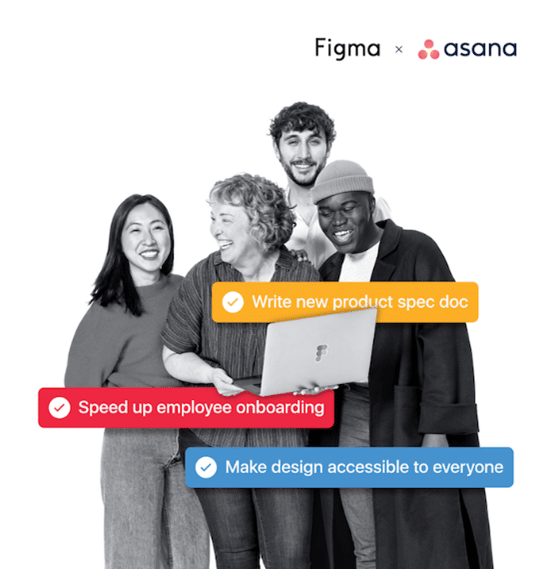
Asana is a web and mobile application designed to help teams organise, track and manage their work. During a community event hosted by the company, where people using the platform could meet and learn from each other, the CEO of Whales and Dolphin conservation said: “I can genuinely say that there are more dolphins and whales alive today because of Asana”. For the company, this really ‘hit home’ and captured the ethos they were marketing – ‘to work together effortlessly’. Following on from this, they decided to integrate their customers within their marketing. They showcased the stories about how Asana has enabled them to do the things that they loved, using murals and photographs to support the message and to make a visual impact. In a recent blog on their webpage, they said: “For us, the Asana brand lives in the stories and experiences of our customers”.
Zendesk is provides software-as-a-service products related to customer support, sales and other customer communications. The company has managed to engage with its audience by adding a humorous personality to its messaging. Rather than dressing everything up in complicated business jargon, its tone of voice is informal, simple and quite frankly, funny. Yet, it has still managed to retain professionalism as the content it shares is informative and relevant. Just by taking a look at their social media feeds, you will see what we mean. Ahead of the trend, Zendesk have understood the value of adding the human touch to its marketing for years, as highlighted in this ad they ran in 2014 aptly titled ‘I like it when he gives me the business’.
When researching the best examples of B2B H2H marketing one company that continues to make the list is Mailchimp, an email marketing company. The business is renowned for its people-first branding and its marketing department is always thinking of clever ways to connect with its audience. In 2017, in partnership with advertising agency Droga5, it launched a campaign named ‘Did you mean Mailchimp?’ which took inspiration from the mispronunciation of the brand name e.g. ‘JailBlimp’, ‘Mail Shrimp’, ‘FailChips’ etc. According to Droga5 ‘marketing isn’t about reaching everyone – it’s about reaching the right ones…we took an approach that celebrated individuality and creativity’ using nine mini campaigns to target potential customers.
Mailchimp mini campaign
There are plenty more cases where B2B businesses have hit the nail on the head when it comes to humanising their brand. Not only does it make for more engaging content, but it also helps build brand loyalty and trust, while fostering authentic relationships with your key customers.
As AI continues to transform the way marketers work, the brands that stand out won’t necessarily be the ones with the most sophisticated technology. They’ll be the ones that combine innovation with authenticity, using technology to enhance rather than replace human connection. While tools and platforms will continue to evolve, one thing remains constant: B2B professionals aren’t businesses, they’re people. And great marketing starts by understanding them.
You can find out more about ‘the humans’ that make Skout shine here.
Content creation for HR suppliers: a B2B playbook that builds pipeline
Many HR suppliers face the same challenge. They're publishing thought leadership, commissioning research, producing webinars and sharing insights on LinkedIn. Website traffic is growing, engagement looks healthy, but enquiries remain stubbornly flat. The problem isn't usually visibility. It's that the content isn't helping HR buyers move closer to a decision. The HR brands generating the [...]
September HR marketing insights: resilience, skills and responsibility
Not every HR trend reveals itself straight away. September's headlines cover everything from resilient hiring intentions and skills-based recruitment to upcoming employment law reforms. On the surface, they appear to belong to separate conversations. Look more closely, however, and they all point to the same reality: employers are operating in an environment where workforce decisions [...]
Why we’re evolving Skout’s leadership team for the next phase of growth
From 1 October 2026, Claire James, Skout’s current Deputy MD takes on the role of Managing Director, while founder Rob Skinner becomes Head of Growth. Claire Lamb will transition from operational responsibilities on 1 January 2027 but will remain actively involved as a board member and strategic advisor. Here’s why we’re making the change and […]
How to get featured in top UK HR publications (Personnel Today, HR Magazine & more)
For HR suppliers, HR technology providers and workplace experts, media coverage is earned through credibility, relevance and expertise rather than product promotion. Securing coverage in leading HR publications can significantly strengthen brand awareness, credibility and trust within the HR sector. Titles such as Personnel Today, HR Magazine, People Management and HR Grapevine are trusted sources [...]
Why your HR tech blog isn’t generating leads (and 6 fixes)
We have all been there. You've invested in content marketing. You're publishing regularly. You've written about industry trends, product updates and workplace challenges. Yet your HR tech blog isn't generating leads. Sound familiar? For many HR technology companies, blogging becomes an activity rather than a strategy. Content gets published because the marketing plan says it [...]