About this article

Read time:

4 minutes

Category:

B2B Marketing, Client success, Guides and advice

Why honesty and authenticity are changing B2B loyalty programmes

I recently took part in an interesting panel discussion, hosted by Go! Networks, about building and nurturing authentic brand loyalty for B2B and B2C organisations. While the discussion took us through lots of different facets of brand loyalty, it was the authenticity part that really interested me.

What became clear quite quickly was that authenticity and purpose are inextricably linked (and if you listen to the discussion, you’ll hear me say exactly this). We’ve seen a whole host of B2C brands risk consumer loyalty by not being authentic and worse, not tying this back to the company purpose. From Brewdog’s culture of fear, to UBS promoting gender equality – only to be outed on Twitter for female employees’ medium hourly pay being 36.8% lower than its male employees. What’s clear is that consumers are no longer prepared to support brands who only talk the talk, and not walk the walk.

And this is no different for B2B brands. Authenticity and loyalty go hand in hand. What does authenticity mean? It’s about how much a buyer believes that a brand is being honest in their dealings with them. It moves through every part of the contact that you have with your customer – direct or indirect – and should move through every part of the organisation.

What’s driving B2B brands current focus on purpose? Mainly it’s due to the changing audience profile. A 2019 Stackla survey found that 86% of consumers consider authenticity as a key factor when deciding which brand to support. Today’s millennial and Gen Z consumers are more vocal about their demand for authenticity. The survey also found that two thirds of Gen Z felt positive about a brand because of their association with a social cause. These are your new B2B buyers.

Social cause isn’t enough

Lots of B2B organisations make the mistake of confusing charity work with purpose. You can’t just show up at a charity and do a day’s work and then plaster it across your corporate social feeds. You must embed it in the culture of the company before you even start talking about it. Think about promoting what you do, rather than doing what you promote. It sounds obvious but lots of brands get it round the wrong way. Authentic action needs to come first, promotion of it second 

LinkedIn is littered with examples of companies supporting charities. But what about the broader implications of this activity? How does this tie back to your purpose? Let’s say that your purpose is being a good neighbour. How then is supporting a national charity on a single day delivering that? Surely it would be better to look for a local charity that you can support day to day. Could you host groups in your office? What resources do you have that could help? It doesn’t have to be a big gesture, rather consistent support that will make a difference.
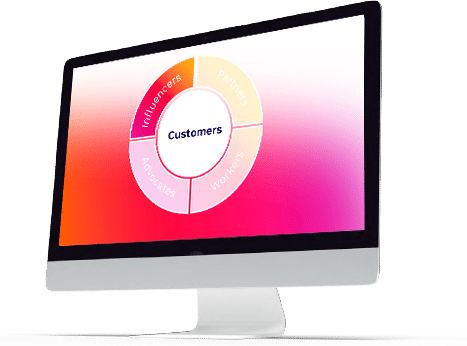
Do you understand the importance of relationships in B2B marketing?

Here’s a short video that helps demystify the relationship eco system.

Understand your audience

Understanding your customers’ core values is crucial if you’re going to be able create a loyal customer base. Not enough time or research goes into understanding audiences in B2B. Ask yourself, do you know how you emotionally connect with your buyers? Don’t forget that they’re consumers and people too. They value similar things – trustworthiness, being a good business, and a company who is easy to do business with.

Consistency is crucial

Often companies deliver a lot of mixed messages – from branding, to values, purpose and even thought leadership – and these can come into conflict or sit awkwardly with each other. Make sure  your communications are addressing all of them in one integrated message. Don’t use clever wording. Simple really is best here.

Create a community

Some of the most successful B2B loyalty programmes are when customers really feel part of something. We’ve seen a rise in the popularity of small, more focused groups, and this means there is a real opportunity for brands to build their own community of advocates. This should be a space for open and honest dialogues (yes, it’s a two-way street). Seek out honest feedback and use frank and open discussions as a way to strengthen your relationships with customers, turning them into advocates.

Creating loyalty – especially in a cautious marketplace – can be a way to deliver value to customers and that rewards the brand in the long run. We all know that it’s more expensive to acquire a new customer than it is to retain one. According to marketing platform hubspot, only a 5% increase in customer retention can increase company revenue by 25-95%. And whether we believe that it’s possible to generate 95% more revenue by retaining customers, certainly having a clear understanding of authentic and purposeful customer loyalty and how it works in your business could deliver a good return.


About this article

Read time:

4 minutes

Category:

B2B Marketing, Client success, Guides and advice

Quiet confidence speaks volumes for your brand

AI search is listening. What is your brand saying?

Browse more blog posts

A silhouette of a woman holding a megaphone - resembling the need for brand consistency
Posted on
byHonor Williamson

Did you know that maintaining brand consistency can increase revenue by an average of 10-20%? If your brand messaging isn’t being picked up, shared or remembered, it’s not because your team isn’t working hard enough. It’s likely because the message itself lacks the clarity and consistency it needs to cut

A visual image showcases tech trends for B2B marketers. The graphic displays icons signaling tech trends such as AI.
Posted on
byHonor Williamson

Did you know that 65% of marketers saw major ranking shifts after Google’s AI algorithm updates in 2024? That’s a significant shake-up, and it’s forcing brands to rethink how they show up in search. While familiar platforms like Google and Bing remain central to how AI tools index content, the

Trust Gap 2
Posted on
byRebecca Brown

If you’re a B2B marketer working with HR solution providers, your challenge goes beyond capturing attention; it’s about earning trust. HR professionals are navigating some of the most complex workplace challenges: evolving compliance demands, hybrid working tensions, wellbeing pressures, and the drive to build inclusive, values-led cultures. They’re time-poor, emotionally

Cooking board with ingredients
Posted on
byRebecca Brown

B2B communications is going through an exciting transition thanks to the explosion of AI. Content is becoming easier and less expensive to create, meaning brands can get their stories out in the world faster than ever. With a touch of a button, generative AI can produce blog articles, social media

An image of tape measures to illustrate measurement in marketing
Posted on
byClaire James

Every global marketing director knows the question is coming: “What did we get for that budget?” And in today’s climate, the answer can’t be a vague reference to awareness or engagement. According to LinkedIn’s B2B Benchmark Report, 76% of B2B marketers feel under pressure to demonstrate ROI in the short

An image of a sign displaying purpose, illustrating B2B PR that has purpose
Posted on
byHonor Williamson

In B2B PR, it’s one thing to be visible, but it’s another to be valuable. Whether its influencing buying decisions, shaping industry conversations or helping to drive commercial outcomes, PR has the potential to do far more than raise brand awareness. Strategically directed PR warms up future buyers and tilts

Chess
Posted on
byRebecca Brown

As a B2B marketing leader, you’ve likely seen competitors steal the spotlight while your industry-leading services and solutions remain invisible. Despite deeper expertise and better results, your content just isn’t cutting through. You’ve tried different tactics, but nothing sticks; it’s causing lots of headaches for you and your team. Our

2025 Podcast_E2_Jon_ website image
Posted on
byRebecca Brown

B2B marketers are producing more content than ever – but is it working? According to research from the LinkedIn B2B Institute, only 5% of potential buyers are actively in-market at any given time. That means the vast majority of content is reaching people who aren’t ready to buy and often,

Speaker presenting at a client services conference, sharing strategies for keeping clients happy with attentive audience engagement.
Posted on
byClaire James

I recently attended a Happy Clients Conference where the room was filled with people who were all responsible for client service in one way shape or form. The topics being discussed on the day all had a similar thread running through them: how can we keep our clients happy? Upon

A image saying the words: Storytelling, relatable, relevant, emotional, engaging
Posted on
byJames Weaver

In B2B, decisions are often viewed through a rational lens. We talk about objectives, KPIs, and, crucially, ROI. But behind every business decision is a person. Many B2B marketers face mounting pressure to deliver measurable results, often while navigating buyer journeys and evolving expectations. According to the 2025 State of

Get in touch

Skout
11 Market Place
Macclesfield
Cheshire
SK10 1EB

Send us a message

Name(Required)

Send us a message