
For the past year workers around the globe have delighted in the benefits that have come from working from home. Business-on-top and trackies-on-bottom has been the go-to look for many Zoom meetings, with business-on-top serving a temporal purpose for the duration of the call before being ditched when that little red ‘x’ is clicked. However, workwear has relaxed significantly since the power suits of the 1980s. Many businesses have welcomed a business casual wardrobe in the workspace allowing workers to tentatively blend wardrobes of ‘work’ and ‘play’. Glimmers of personality and individuality have crept into office dress codes with a statement earing here or a pop of colour there. But, as the pandemic has revealed, rule-abiding uniform is not essential to productivity, nor is it beneficial to celebrating staff as the exciting individuals they are. In a post-pandemic world, what is the etiquette on office attire?
Previously, it was customary for women working in business to tower in elegant stiletto heels. In 2016, temporary receptionist Nicola Thorp was sent home from work after refusing to wear such footwear. This subsequently sparked a heated debate over the requirement of heels in the workplace and led to a parliamentary debate in March 2017. However, legislation protecting women from dismissal over their footwear was rejected by the government. This has not been an issue confined to the office but has also become a very global and public debate. In 2016, Julia Roberts made headlines by walking barefoot on the Cannes Film Festival red carpet in protest against the festival’s expectations of formal dress for women. Likewise, in 2018, Kirsten Stewart publicly removed her Christian Louboutin’s on the festival’s red carpet standing in solidarity with women across the industry and world. While the high-heel debate has been a high-profile public discourse, considerations to the struggles that may arise when people with protected characteristics are asked to conform to dress codes has often gone under the radar.
Expectations of office-appropriate dress have been evidently loaded with white privilege. Back in 2016, an MBA student called Rosalia tweeted a concerning Google search. The results showed that when searching “unprofessional hairstyles for work”, results displayed images of Black women with naturally Afro hair. Contrastingly, when searching for “professional hairstyles for work”, results yielded images of White women with neat up-dos. Rosalia’s tweet sparked campaigns against rampant racial bias in the workplace. Responding to these, California became the first US state to pass the Crown Act (Create a Respectful and Open Workplace for Natural Hair act). So far, only 12 other states have followed suit.
Ablism has also penetrated workplace dress codes. Concerns have been raised over how accessible workwear is for those with disabilities. For example, considerations must be made to the struggles neurodivergent people may encounter with particular fabrics and how comfortable wheelchair users are in restrictive garments.
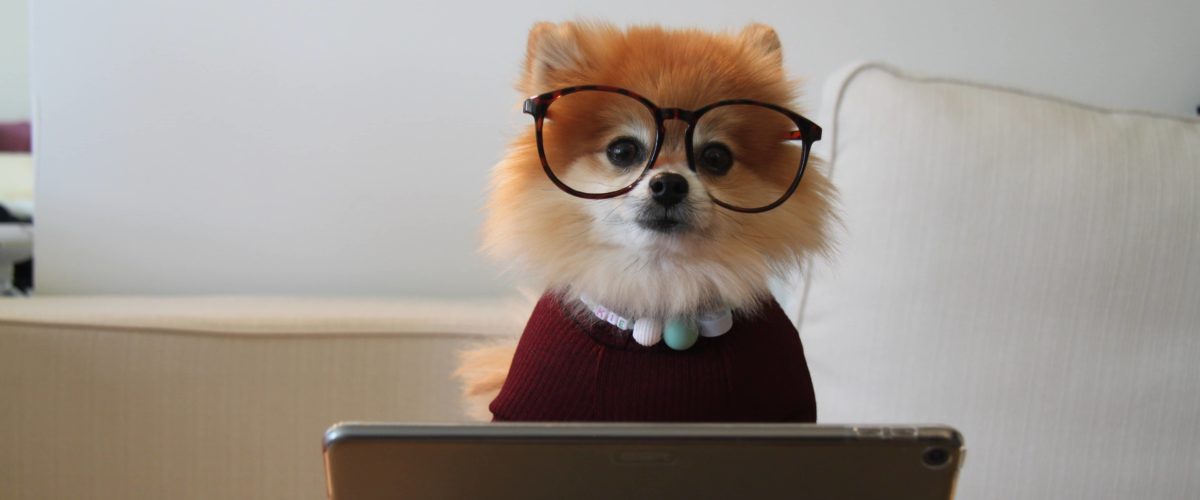
While the pandemic may have physically distanced us, is it possible that the digitalisation of bringing work into the home has made our connections with clients, colleagues and partners a little more human? Rather than enter meetings in our professional get-up in white-washed offices, we have peered into each other’s homes commenting on furnishings, exchanging the triumphs and troubles of home-schooling, and excused dog barks, children’s giggles, and interruptions. We have all become a little more ‘us’ in the WFH space. While it is perhaps not the best idea to re-enter the office in a onesie, perhaps it is a good time for employers to shake up office dress codes.
After over a year at home, many of us may be thrilled to blow the dust off our favourite office looks. Some may also find office attire the necessary signifier of the boundaries between worktime and downtime. Nevertheless, business casual is continually on the rise across a variety of industries. Statistics show that the switch in office dress codes has been brewing for a while now. In 1995, US necktie sales reached $2 billion. However, by 2014, sales had plummeted to $850 million. In the UK, workwear retailers Charles Tyrwhitt and T.M. Lewin have introduced business casual ranges to adapt to the shift in demand. As a B2B marketing agency, it is important for the Skout dress code to strike an important balance. While the marketing industry has taken a significant leap towards casual dress, B2B engagements still tend to have an expected formality. Just as we apply the creativity and excitement of B2C PR to our client’s needs, our team can be seen tailoring comfortable, smart, accessible, and stylish looks for their workday. As we return to the office in 2021, perhaps the pandemic has been the significant push employers need to adapt dress codes that celebrate and appreciate their staff.